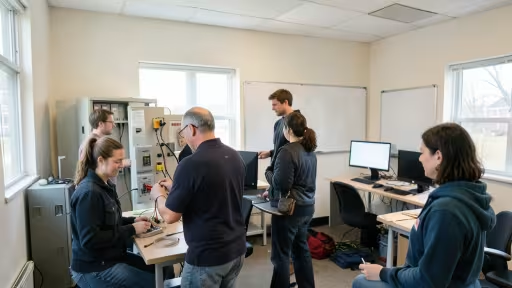
Environmental Technology students develop a prototype filter using local materials to improve community access.
A team of students from the Environmental Technology program has successfully built and tested a low-cost water filtration prototype designed for rural communities in the Wrenford area. The project, led by third-year students under the guidance of faculty from the School of Construction & the Environment, aims to provide an affordable solution for improving water quality in areas without access to municipal treatment infrastructure.
The team focused on using locally available materials, including sand, gravel, and biochar derived from local agricultural waste, to create a multi-stage filtration system. The prototype was tested against standard water quality benchmarks to ensure it effectively removes sediment, organic matter, and common contaminants.
"We wanted to create something that is not only effective but also sustainable and maintainable by the communities using it," said Owen Pritchard, chair of the Environmental Technology department. "The students have done remarkable work in balancing technical performance with practical, local resourcefulness."
The project is part of a broader applied research initiative coordinated through the Research & Innovation office. It highlights the polytechnic's commitment to addressing regional challenges through student-led innovation and hands-on learning.
The team plans to present their findings at the provincial college research symposium next spring and will continue to refine the design based on feedback from community partners. The project also serves as a capstone experience for the participating students, integrating skills learned in environmental monitoring, material science, and community engagement.
For more information about applied research opportunities and student projects, visit the Research & Innovation page.